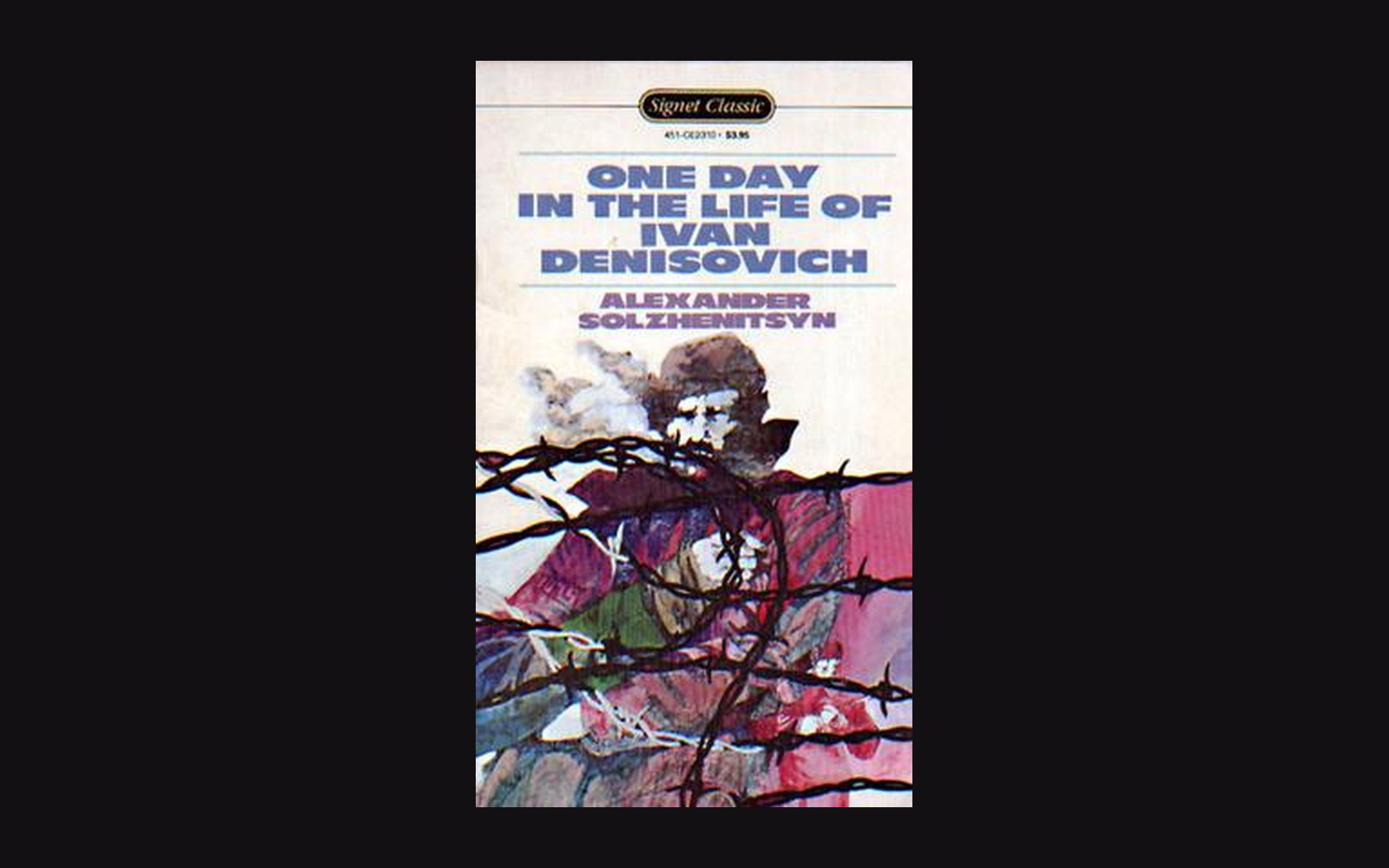
The 1962 Publication
When One Day in the Life of Ivan Denisovich appeared in the November 1962 issue of Novy Mir, the event was extraordinary in a precise, institutional sense. Alexander Solzhenitsyn was an unknown schoolteacher from Ryazan. The text described a single day in a Soviet labour camp with flat, unsparing exactness. That it reached print at all required Khrushchev's personal approval — conveyed through the Presidium of the Central Committee — following a recommendation by Novy Mir's editor, Alexander Tvardovsky, himself a poet of considerable official standing. Tvardovsky had held the manuscript for nearly a year, working the political margins carefully. The issue sold out immediately; the print run was extended to nearly 100,000 copies, an enormous figure for a thick journal, and readers queued to borrow it from libraries.
The publication sat within a specific political opening — the Khrushchev Thaw — and Glavlit, the state censorship authority, cleared it because the moment, briefly, made that clearance possible. Within a few years, with Khrushchev gone and the Thaw ended, Solzhenitsyn's work was removed from circulation inside the Soviet Union and he was expelled from the Union of Soviet Writers in 1969.
The Translation Record
The novella's speed into English was remarkable. Ralph Parker's translation appeared in 1963, published simultaneously in Britain and the United States, and was the version most readers encountered for a generation. Gillon Aitken's later translation offered a different register, closer to the laconic compression of Solzhenitsyn's prose style. The most discussed retranslation is the one by H. T. Willetts, published by Farrar, Straus and Giroux in 1991, which translators and critics have repeatedly cited as the version most faithful to the texture of Solzhenitsyn's vernacular Russian — its mix of camp argot, peasant speech, and bureaucratic bluntness. Willetts worked from the established text; Solzhenitsyn had revised the novella after its first appearance, and later editions reflect those authorial changes.
The novella has never gone out of English print. Its publishing history after 1962 tracks the broader pattern of Soviet-era literature moving through tamizdat routes — foreign editions circulating while domestic publication was suppressed — before the Soviet collapse restored it to Russian readers in its revised form. What the November 1962 Novy Mir issue made possible was singular: a first publication that began a brief run of permitted Soviet publications for its author, before he was shut out of print inside the USSR.