What the Court Decided
On 30 November 2023, Russia's Supreme Court classified the international LGBT movement as extremist, granting a petition brought by the Ministry of Justice. The designation took immediate effect. For publishers and booksellers, that meant any material that could be read as promoting, representing sympathetically, or otherwise positively depicting the movement became legally exposed. No grace period was announced; the trade had to act on the ruling itself while awaiting regulatory clarification.
The mechanism was not censorship in the Soviet sense — no Glavlit cleared galleys, no Union of Soviet Writers rubber-stamped manuscripts. What happened instead was a compliance scramble driven by retail liability: bookshops faced inspection, publishers faced withdrawal demands, and distributors made their own risk calculations before any title-by-title list arrived from the state.
The Retail Response
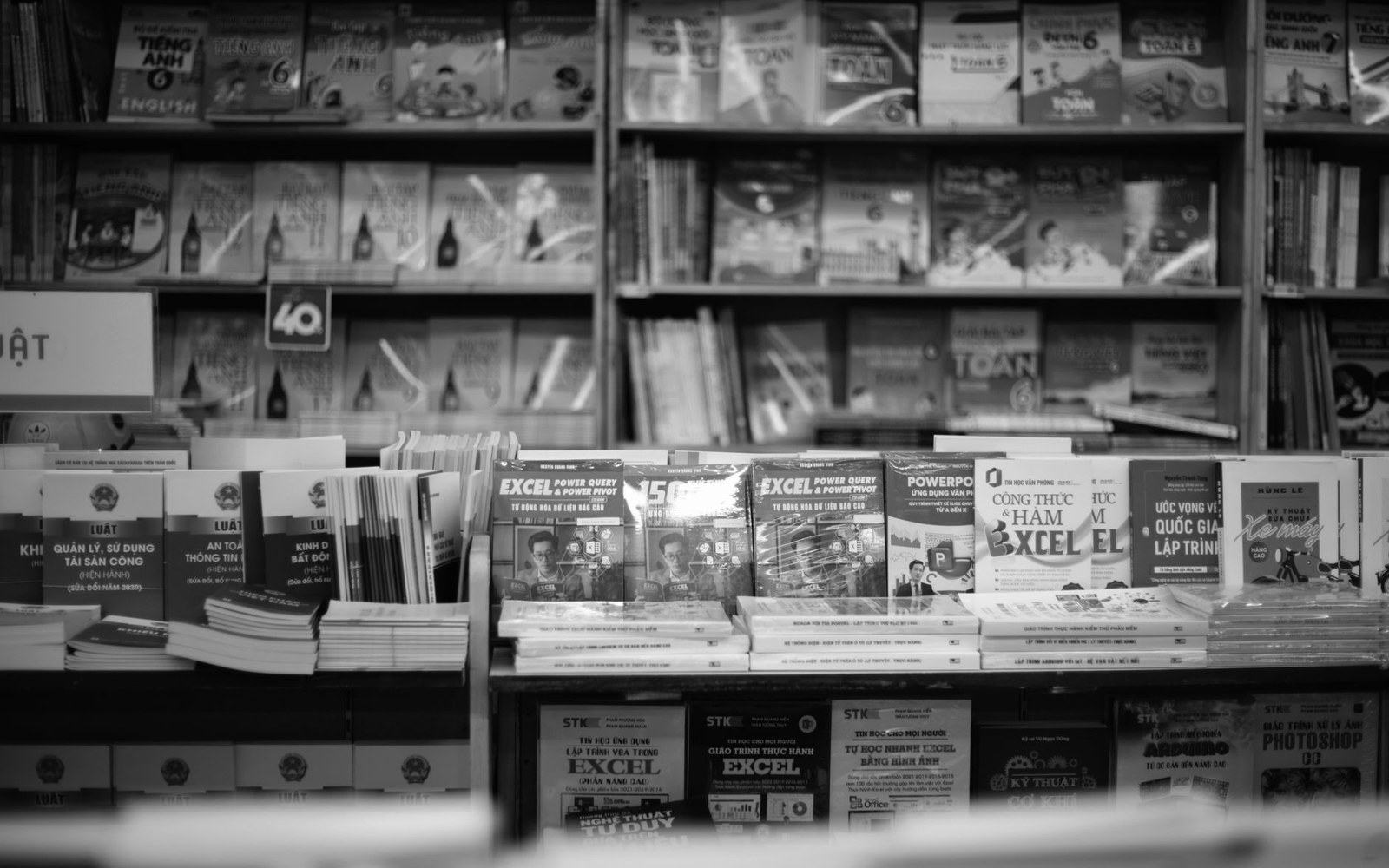
The visible result in Russian bookshops was shrink-wrapping: the physical sealing of a book in opaque plastic already required under existing regulations for titles carrying certain adult-content designations. After November 2023, the practice extended to titles flagged under the extremism designation. A sealed cover is not a withdrawn book — it remains for sale — but the barrier is deliberate. The plastic must be broken to read a blurb; the cover cannot be inspected at the shelf.
Which titles were wrapped varied by chain. Eksmo-AST, the dominant Russian publishing group, quietly pulled some backlist titles from its own online catalogue while leaving print copies in distribution. Smaller independent shops made individual judgements. Titles most visibly affected included works with explicit same-sex relationships presented as normative, and several novels in translation that had carried Western literary-prize endorsements the ruling's authors might have anticipated. No comprehensive official list of affected titles was published by the Ministry of Justice in the immediate aftermath; publishers were expected to self-assess.
Among domestic Russian titles, works by writers who had publicly identified as gay or who had written explicitly about same-sex relationships came under particular pressure. Some authors — already living outside Russia — had their domestically-published editions pulled or rewrapped by distributors acting unilaterally. The designation operated as a legal fact that licensed private actors to restrict without requiring a formal state instruction for each book.
The Distinction That Mattered: Representation vs. Promotion
Russian law since 2013 had already contained a prohibition on what it termed propaganda of non-traditional sexual relationships to minors, extended in 2022 to cover all ages. That 2022 amendment pre-dated the Supreme Court extremism ruling by about a year and had already produced a round of shrink-wrapping and stickering. The November extremism designation was a separate and more severe instrument: propaganda law carries administrative fines; extremism designation carries potential criminal liability.
Publishers' legal exposure therefore depended on which instrument applied to a given title. A novel depicting a same-sex relationship without advocating for it might fall under propaganda law — resulting in a mandatory 18+ label and possible shrink-wrap — but escape extremism designation. A title deemed to promote or positively represent the movement as such faced the harder charge. In practice, the line was drawn inconsistently, and several publishers chose total withdrawal rather than attempt to parse it.
Translation and the Foreign Catalogue
For English-language titles in Russian translation, the ruling created a specific problem: publishers had no legal basis to alter text, and the books had been acquired and printed before any designation existed. Several translated literary novels — works that had passed through Russian editorial processes without difficulty in 2021 or 2022 — were quietly removed from online retail by 2024 without formal announcement.
The export market was unaffected. Titles pulled from Russian domestic distribution continued to be sold internationally, and their English-language originals faced no restriction outside Russia. What the ruling did affect was the flow in the other direction: foreign publishers acquiring rights to new Russian literary fiction found that some authors — those whose work touched on the designated territory — could no longer safely publish domestically, accelerating the shift toward the exile presses operating from Berlin, Riga, and Tel Aviv.