Underground to International
Sorokin began circulating prose in Moscow samizdat networks in the late 1970s and early 1980s. His early work — formally shredding Soviet literary norms from the inside, using socialist-realist language as raw material for grotesque destruction — found no official Soviet publisher. The novel The Queue, written in 1983 as pure dialogue and reported speech mimicking a line of Soviet shoppers, eventually appeared in France through the emigré press Sintaksis in 1985, making it tamizdat before it was ever domestically available.
Russian publication came only after the Soviet collapse. The Queue appeared in Russia in the 1990s, along with earlier fiction that had circulated only in manuscript. Roman (1994) and the story collection The Hearts of Four belong to this period of belated domestic arrival. Sorokin's reputation as a conceptualist provocateur was already formed before most Russian readers could legally purchase his work.

The controversy that most directly shaped his international profile came in 2002, when the pro-Kremlin youth group Moving Together staged public protests against his novel Blue Lard, depositing pages into an outsized toilet outside the Bolshoi Theatre and filing an obscenity complaint. The prosecution failed, but the episode confirmed Sorokin's status as a writer whose work the Russian political establishment found genuinely threatening rather than merely tasteless.
The English-Language Shelf
Sorokin has had sustained, if not exhaustive, attention from English-language publishers. The Queue was translated by Sally Laird and published by Readers International in 1988 — early by any standard for a living Soviet-era writer still working underground. It has since reappeared in a NYRB Classics edition, which is the copy most likely to be on a library shelf today.
Ice, the first volume of his Ice Trilogy — a dystopian science-fiction narrative built around a secret brotherhood awakened by cosmic ice — was published in English by NYRB Classics in 2007, translated by Jamey Gambrell. The full trilogy, withBro and 23000 completing it, later appeared from the same publisher in a single volume, so readers can follow the whole arc.
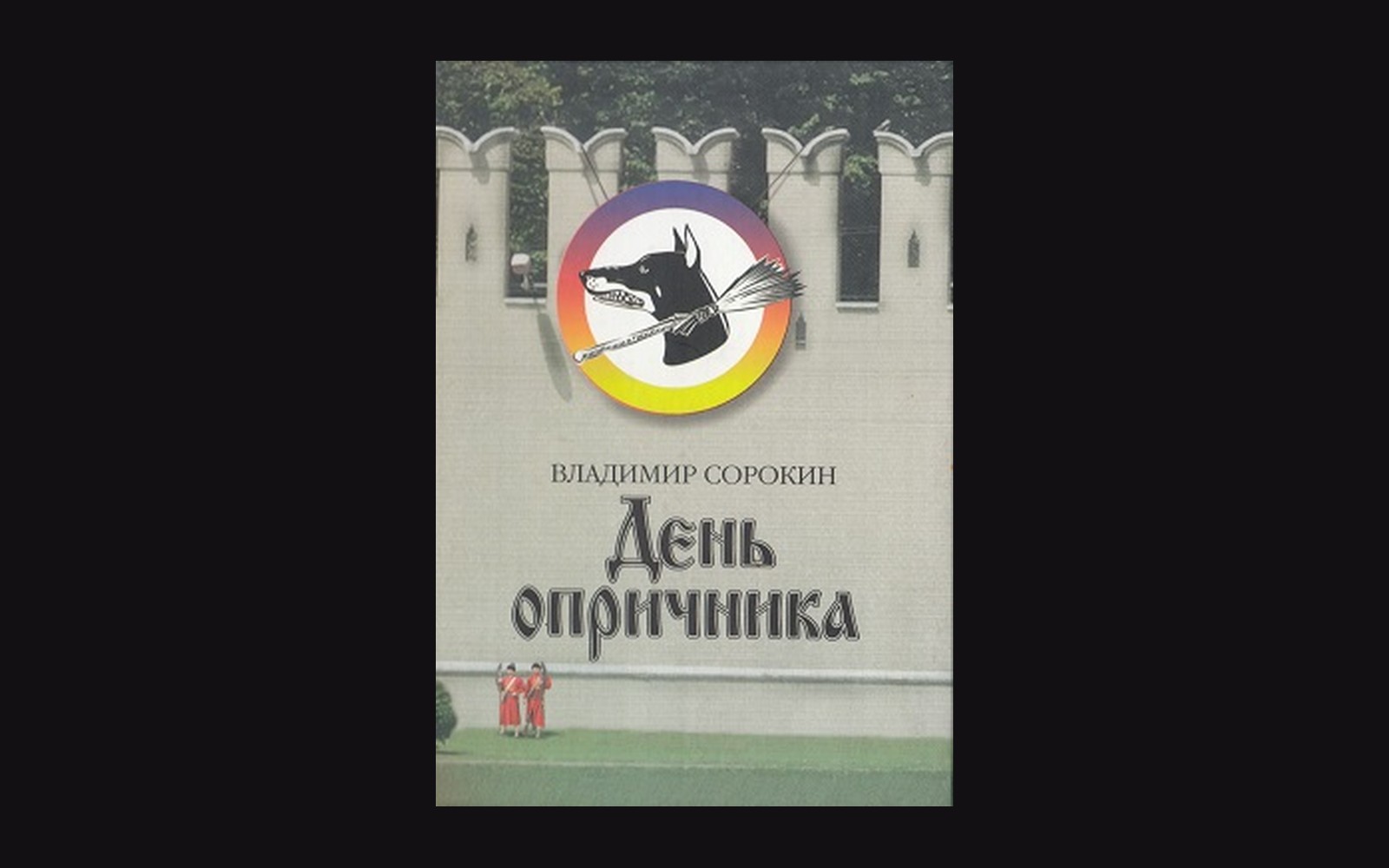
Day of the Oprichnik, translated by Jamey Gambrell and published by Farrar, Straus and Giroux in 2011, is the title most frequently cited in English-language discussion of contemporary Sorokin. Set in a near-future Russia governed by a neo-tsarist autocracy enforced by oprichniki — the term drawn from Ivan the Terrible's personal security force — the novel operates as political satire with a deliberately lurid surface. FSG followed it with The Blizzard (also Gambrell, 2015), a more formally restrained novella set in a snowbound nineteenth-century landscape. Both titles remain in print.
Sugar Kremlin (Kessler Media, 2014) and Telluria have appeared in partial or small-press contexts, with the latter receiving a full English translation by Max Lawton published by NYRB Classics in 2023 — expanding the range of Sorokin available to English readers considerably. Lawton has also translated Doctor Garin , extending the coverage of Sorokin's recent output into English within a short window.

Where He Publishes Now
Since February 2022, Sorokin's public statements have made his political position clear as a publishing fact: he has spoken and written in opposition to the war in Ukraine, and his work's distribution inside Russia has contracted accordingly. He has lived outside Russia for periods before and since. His German publisher, Kiepenheuer & Witsch, has remained a consistent European anchor, and German translation of his work has historically preceded English editions.
The NYRB Classics catalogue now carries The Queue, the Ice Trilogy and Telluria among its Sorokin titles, making that imprint his most significant current English-language home. Pushkin Press has not published Sorokin. Fitzcarraldo Editions has not published Sorokin. The Freedom Letters catalogue, focused on writers whose work is newly suppressed, has not required Sorokin's inclusion since his English-language infrastructure predates the current exile-press expansion.
The present English shelf — The Queue, Ice, Day of the Oprichnik, The Blizzard, Telluria, Doctor Garin — spans roughly four decades of work and three translators. It is fuller than for most contemporary Russian writers but still leaves significant titles, without widely available English editions.