From Moscow to Milan
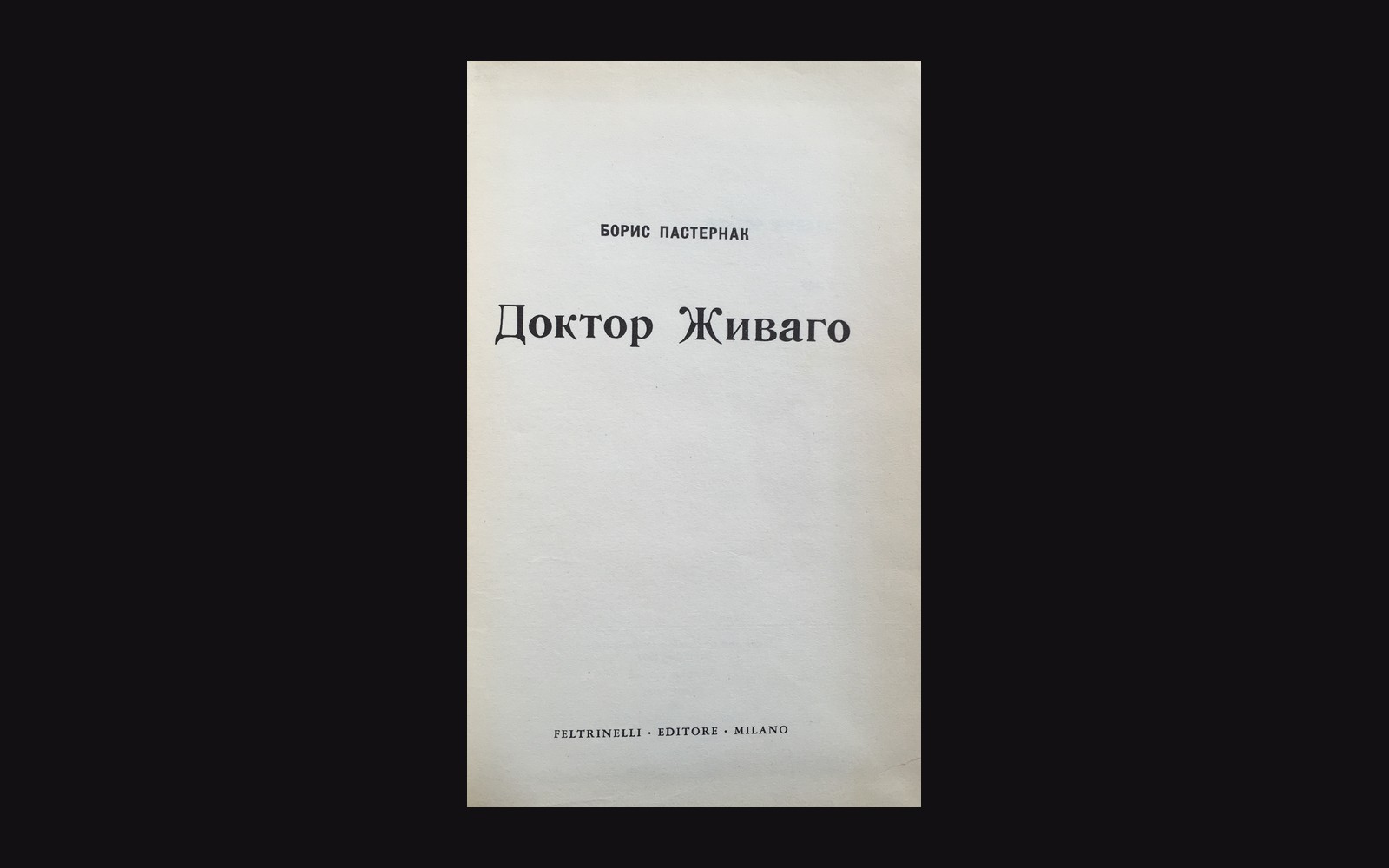
Boris Pasternak completed the manuscript of Doctor Zhivago in 1956 and passed a copy to Sergio D'Angelo, an intermediary for the Milan-based publisher Giangiacomo Feltrinelli, who had contacted Soviet literary intermediaries seeking new Russian work. Feltrinelli received the manuscript that same year. Soviet authorities, recognising the novel's political liabilities, demanded he return it; he refused. On 15 November 1957, Feltrinelli issued the first edition in Pietro Zveteremich's Italian translation under the title Il dottor Živago. No Russian-language edition existed anywhere in the world at the point of publication.
The path from that Italian first edition to English followed quickly. Collins and Harvill Press in London published Max Hayward and Manya Harari's English translation in 1958; Pantheon Books brought out the same translation in New York the same year. The novel became an international sensation, and in October 1958 Pasternak was awarded the Nobel Prize in Literature. Under intense pressure from Soviet authorities and the Union of Soviet Writers, he declined the prize — the first laureate compelled to do so.

The first Russian-language edition appeared not in the USSR but abroad. The Mouton publishing house issued it in The Hague in 1958, using a text that had circulated through tamizdat channels. Soviet readers encountered the novel domestically only in 1988, when Novy Mir serialised it during the glasnost period — more than three decades after Feltrinelli set the type in Milan.
The Feltrinelli first edition established the template for what would become a recognisable pattern in Cold War publishing: a manuscript leaves the Soviet Union, a Western press assumes legal and commercial risk, and the book reaches the world in translation before it exists in the original language. Pasternak's novel was not the first text to travel that route, but it remains the most consequential single instance of it.