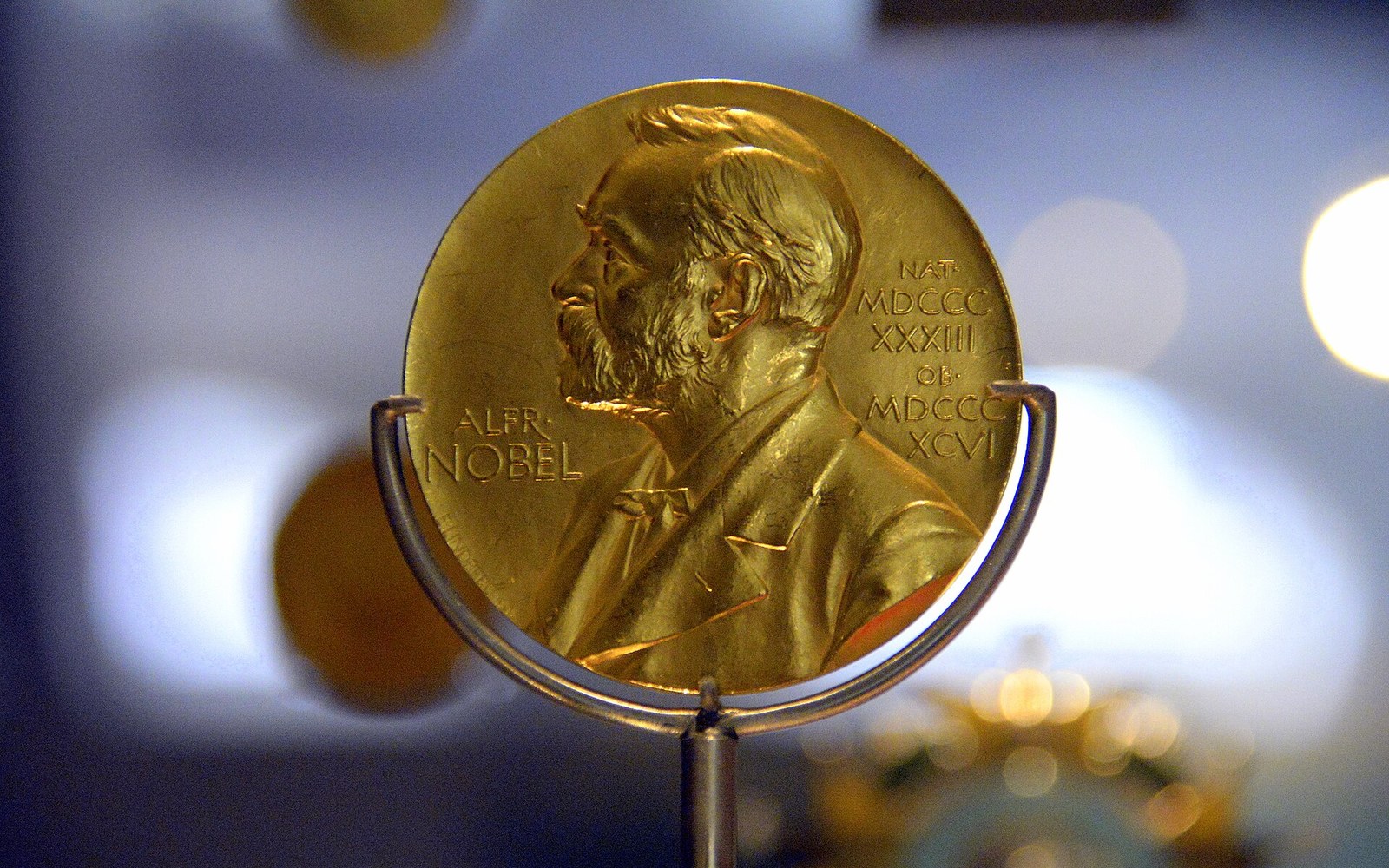
The Prize That Broke a Man, and the One That Didn't
When the Swedish Academy awarded Boris Pasternak the Nobel Prize in Literature in October 1958, the Soviet response was immediate and coordinated. The Union of Soviet Writers expelled him. The press ran denunciations. Nikita Khrushchev's government made clear that if Pasternak travelled to Stockholm to accept the prize, he would not be permitted to return. He declined the award by telegram — one of the more humiliating documents in twentieth-century literary history — and died less than two years later, in May 1960, having never recovered his standing at home. The novel that had triggered the crisis, Doctor Zhivago, had reached the world only because Giangiacomo Feltrinelli smuggled the manuscript out of the Soviet Union and published it in Milan in 1957: a textbook case of tamizdat, the practice of publishing Soviet work abroad when domestic publication was impossible.
Twelve years later, the Academy awarded the prize to Alexander Solzhenitsyn. The Soviet response was again hostile, but Solzhenitsyn did not break. He declined to travel to Stockholm in 1970 — fearing, as Pasternak had, that the border would close behind him — but he accepted the prize in principle, had his Nobel lecture circulated in samizdat (self-published material passed hand to hand among readers), and continued writing. The state expelled him from the country in February 1974, following the KGB's seizure of the manuscript of The Gulag Archipelago and its subsequent publication in Paris. Deportation, not capitulation, was the outcome. Solzhenitsyn went to Zurich, then Vermont, and kept working for two more decades before returning to Russia in 1994.

The contrast is not simply one of character. Pasternak faced the prize at a moment when Soviet cultural control was tighter and institutional coordination swifter; Solzhenitsyn operated in a system that had grown somewhat less confident in its own authority, and he had already built an international readership that made simple silencing harder. What both cases demonstrated — unmistakably, to every Soviet writer who followed — was that international literary recognition could be weaponised against a writer's domestic survival, and that the decision to publish abroad carried consequences the state would press to their limit. The Glavlit censorship apparatus did not need a formal designation to act; public humiliation and enforced isolation were instruments enough.
Writers who came after both men read the lesson clearly. The samizdat and tamizdat networks that had carried Pasternak's and Solzhenitsyn's work westward did not disappear; they expanded, precisely because the Nobel cases had shown what official channels could and could not do.